


Last updated: October 2026 · Written by the Sisa Peru Tours editorial team
Machu Picchu sits at 2,430 meters (7,970 feet) above sea level, on a ridge above the Urubamba River, according to UNESCO. At that height, the weather changes quickly and the year splits into two clear seasons. Choosing the best time to visit Machu Picchu affects the views, the trails you can hike and how many people share the site with you.
Quick Answer: When Is the Best Time to Visit Machu Picchu?
The best time to visit Machu Picchu is May to September, during the dry season, when rain is lowest and views are clearest. May and September give the best balance of dry weather and smaller crowds. June to August are the driest months but also the busiest. From November to March, rain is frequent, but the site stays open and the mountains turn green.

Best Time to Visit Machu Picchu at a Glance
Each traveler has a different priority. This matrix, built by our Cusco operations team, shows which months fit each one:
| Your priority | Best months | Why |
|---|---|---|
| Driest weather | June to August | Lowest average rainfall of the year |
| Good weather with fewer crowds | May and September | Shoulder months: dry most days, before or after the peak |
| Green scenery and lower demand | April and October to November | Transition months: the hills are green and rain is still moderate |
| Hiking the Inca Trail | May to September | Drier trails; the classic Inca Trail closes every February |
| Photography | May and August to September | Clear mornings and dramatic clouds; see the photography section below |
| Lowest crowds overall | February and March | Wet season, outside the high-capacity calendar |
Machu Picchu Weather by Month
Machu Picchu weather follows a simple pattern: dry from about April or May to October, wet from November to March. PromPerú, Peru’s tourism board, describes dry-season days at Machu Picchu as sunny, with around 20 °C (68 °F) in the day and 10 °C (50 °F) at night.
The rainfall figures below are 30-year monthly averages for the Machupicchu district, published by the weather service Climatempo. Use them to compare months, not to predict a specific day.
| Month | Average rainfall | Season | Crowds |
|---|---|---|---|
| January | 271 mm | Wet | Moderate (busy around New Year) |
| February | 252 mm | Wet | Low |
| March | 248 mm | Wet | Low |
| April | 150 mm | Transition | Moderate (busy at Easter) |
| May | 69 mm | Dry | Moderate |
| June | 45 mm | Dry | High |
| July | 46 mm | Dry | High |
| August | 67 mm | Dry | High |
| September | 97 mm | Dry | Moderate to high |
| October | 156 mm | Transition | Moderate to high |
| November | 186 mm | Wet | Moderate |
| December | 240 mm | Wet | Moderate (busy at year-end) |
The crowd column follows Peru’s official capacity calendar for 2026. The Ministry of Culture allows 5,600 visitors a day on high-season dates (June 19 to November 2, January 1, April 2–5 and December 30–31) and 4,500 on all other days, as reported by Andina.
January
January is one of the wettest months, with about 271 mm of rain on average. Showers often come in the afternoon, so an early entry time helps. The site is busy on January 1 and calmer after the first week.
February
February brings heavy rain and the fewest visitors of the year. The classic Inca Trail closes for maintenance every February; in 2026 it closed from January 31 and reopened on March 1, according to La República. The citadel itself can still be reached by train and bus.
March
March is still wet, with about 248 mm of rain, but crowds stay low. The Inca Trail reopens on March 1. Pack a rain jacket for every day.
April
April is a transition month. Rain drops to about 150 mm and the valley is at its greenest. Expect more visitors over Easter week, which in 2026 fell on April 2–5.
May
May is one of the best months to visit Machu Picchu. Rain falls to about 69 mm, mornings are often clear and demand is lower than in June. It is also a good month for the Inca Trail.
June
June is dry, with about 45 mm of rain, and cold at night. Demand rises from mid-June: the high-capacity season started on June 19 in 2026, and Cusco celebrates Inti Raymi on June 24. Book train seats and entry tickets early.
July
July is the driest and busiest month. Days are sunny and nights are cold. Tickets for Huayna Picchu and Machu Picchu Mountain sell out first in this period.
August
August stays dry, with about 67 mm of rain, and very busy. Afternoons can be windy, and the first spring clouds may appear late in the month.
September
September is a strong choice for travelers who want dry weather with slightly fewer people than in July. Rain is around 97 mm, and the first spring showers may appear late in the month.
October
October marks the start of the transition, with about 156 mm of rain. Many days are still dry in the morning, and the landscape turns green again.
November
November is the start of the wet season, with about 186 mm of rain. The high-capacity calendar ends on November 2, so the rest of the month is calmer.
December
December is wet, with about 240 mm of rain. Demand rises again for Christmas and New Year, with high-capacity days on December 30–31.
Dry Season vs Rainy Season
| Factor | Dry season (May–September) | Rainy season (November–March) |
|---|---|---|
| Rain | Low; many fully dry days | Frequent; showers can last hours |
| Views | Clearer mornings | Cloud and mist, with short clear spells |
| Crowds | High, especially June to August | Lower, except around New Year |
| Trails | Inca Trail open and drier | Muddy paths; Inca Trail closed in February |
| Landscape | Drier and browner | Green hills and full rivers |
| Booking | Reserve tickets and trains well ahead | More flexible, but still book ahead |
Is Machu Picchu open during the rainy season? Yes. The citadel is open all year. Heavy rain can occasionally disrupt the railway or roads, so build a spare day into your plans between November and March.
Best Time for Clear Views
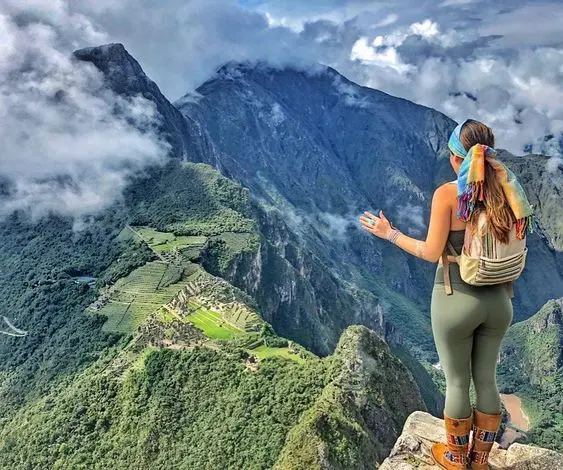
The clearest views usually come in the dry season, from May to September. Morning cloud often sits over the site and lifts by mid-morning, so the first entry slots are not always the clearest. If views matter most, an entry around 9:00 to 10:00 can be a better bet than the first bus.
Best Time to Avoid Crowds
Machu Picchu is least crowded from February to March and in the first weeks of November and December. Within any month, weekdays are calmer than Peruvian holidays. In high season, the daily cap rises to 5,600 visitors, so a mid-morning or early-afternoon slot can feel busier than late afternoon.
Best Time for Photography
For photography, May and August to September offer the best mix of clear skies and soft light. The wet-season months give you mist moving over the peaks, which many photographers prefer for mood. Bring a lens cloth: humidity can fog the lens when you come out of the bus.
Best Time for Hiking
The best time for hiking around Machu Picchu is May to September. Trails are dry and the risk of slippery stone steps is lower. If you plan to hike Huayna Picchu or Machu Picchu Mountain, book those tickets first, because they have limited daily slots. Our Huayna Picchu guide explains the climb, and our Machu Picchu trekking guide compares the main routes.
For the classic route, the 4-day Inca Trail to Machu Picchu needs permits months in advance in the dry season. The shorter 2-day Inca Trail is an option if you have less time. For trail-specific timing, read our guide to the best time to hike the Inca Trail.
When Our Local Cusco Team Recommends Visiting
Our team runs Machu Picchu trips year-round from Cusco and the Sacred Valley. For most first-time visitors, we recommend May or September. These months give you dry weather on most days without the July peak.
Three practical tips from our operations team:
- Sleep in Aguas Calientes the night before. You can enter at the time you choose and avoid a pre-dawn start from Cusco. Our Sacred Valley and Machu Picchu 2-day tour includes that night.
- Give yourself time at altitude. Cusco is higher than Machu Picchu. Read our altitude sickness tips for Cusco before you fly.
- Book tickets first, then trains and hotels. Entry tickets are sold only on the official site, tuboleto.cultura.pe. Our Machu Picchu tickets guide explains the circuits.
Ready to choose your dates? Compare our Machu Picchu tour packages, from 2 to 7 days, all with train, entry ticket and guide included.
If you are also planning other regions, see our guide to destinations across Peru, which covers seasons across the whole country. To plan the full route from the capital, read Lima to Machu Picchu.
FAQs
What is the best month to visit Machu Picchu?
May and September are the best months for most travelers. Both fall in the dry season, with low rainfall and many clear mornings. They are less busy than June, July and August, when demand peaks and daily visitor capacity rises to 5,600 people.
When is Machu Picchu least crowded?
Machu Picchu is least crowded in February and March, during the wet season. The Inca Trail is closed in February, and fewer tours run. Expect rain on most days. The first half of November and early December are also calmer, outside the holiday dates.
Is Machu Picchu open during rainy season?
Yes. Machu Picchu is open all year, including the rainy season from November to March. Only the classic Inca Trail closes, every February, for maintenance. Heavy rain can occasionally affect trains or roads, so leave a spare day in your itinerary in those months.
Is May a good time to visit Machu Picchu?
Yes. May is one of the best times to visit Machu Picchu. Average rainfall drops to about 69 mm, mornings are often clear and the landscape is still green after the wet season. Crowds are lower than in June and July, and the Inca Trail is in good condition.
Should I visit Machu Picchu in June or September?
Choose June if you want the driest weather and the energy of Inti Raymi in Cusco on June 24. Choose September if you prefer slightly fewer visitors and still mostly dry days. Both months need tickets and train seats booked well in advance.
What month has the best weather in Machu Picchu?
June and July have the best weather, with the lowest average rainfall of the year (about 45 mm). Days are sunny and mild, around 20 °C, and nights are cold. These are also the busiest months, so book early.
Does it rain all day in Machu Picchu?
Usually not. Even in the wet season, rain often comes in showers, with dry or misty breaks between them. Afternoons tend to be wetter. A rain jacket, waterproof shoes and a flexible schedule let you enjoy the site in most conditions.
When should I avoid Machu Picchu?
Avoid late July and early August if you dislike crowds, and February if you want to hike the Inca Trail, since it is closed. If you travel in the wet season, avoid tight connections: leave a buffer day between Machu Picchu and your flight home.
Plan Your Machu Picchu Dates with Sisa Peru Tours
Sisa Peru Tours is a local operator based in Chinchero, in the Sacred Valley. The best time to visit Machu Picchu also depends on the rest of your route, so tell us your travel month, group size and pace, and we will suggest the itinerary and entry time that fit the season.