


Machu Picchu and Huayna Picchu are two different but connected landmarks in Peru’s Sacred Valley: Machu Picchu is the 15th-century Inca citadel itself, while Huayna Picchu is the steep mountain that rises directly behind it and appears in almost every classic postcard photo. Many travelers searching for “Huayna Picchu or Machu Picchu” are actually trying to figure out whether these are the same place, whether they need separate tickets, and which one is worth climbing. This guide answers all of that in one place.
Whether you found this page by typing “Machu Picchu,” “Macchu Picchu,” or even “Machu Pichu” into a search bar, you’re looking for the same UNESCO World Heritage Site — and by the end of this guide you’ll know exactly how the citadel, Huayna Picchu, and the separate Machu Picchu Mountain relate to each other, and how to plan a visit that includes the one that fits your trip.
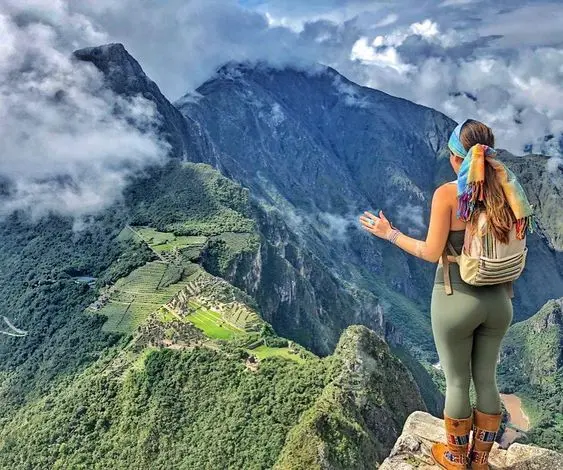
What Is Machu Picchu?
Machu Picchu is a 15th-century Inca citadel built on a mountain ridge above the Urubamba River, roughly 2,430 meters (7,972 feet) above sea level. It was built during the reign of the Inca emperor Pachacutec, abandoned during the Spanish conquest, and never found by the colonial Spanish — which is one reason its stonework survived so intact. In Quechua, “machu” means “old” and “picchu” means “mountain” or “peak,” so Machu Picchu translates roughly to “Old Mountain.”
The site was brought to international attention by American explorer Hiram Bingham in 1911, was inscribed as a UNESCO World Heritage Site in 1983, and was named one of the New7Wonders of the World in 2007. For the exact altitude breakdown of every sector of the citadel, see our Machu Picchu Elevation guide.
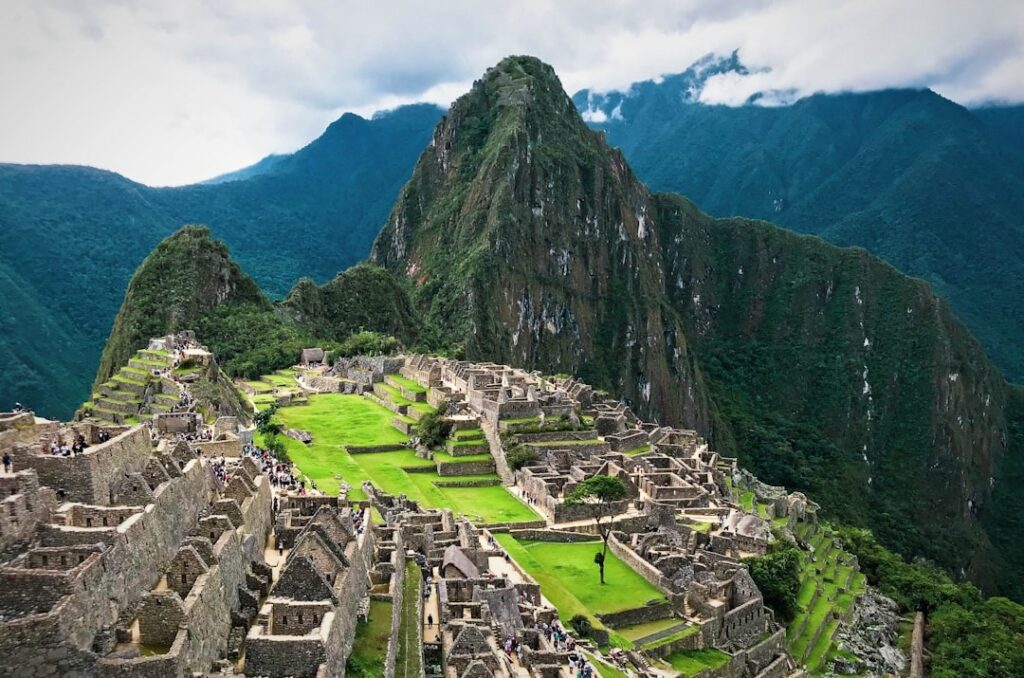
What Is Huayna Picchu?
Huayna Picchu — also spelled Wayna Picchu — is the steep, cone-shaped mountain that towers directly behind the Machu Picchu citadel in almost every photograph of the site. “Wayna” means “young” in Quechua, so Huayna Picchu means “Young Mountain,” a natural counterpart to Machu Picchu’s “Old Mountain.” It rises to approximately 2,693–2,720 meters (8,835–8,923 feet), around 260–290 meters above the citadel itself.
Some Spanish-speaking visitors informally refer to it as “Cerro Picchu” (“picchu hill/peak”), though Huayna Picchu is the name used on official tickets and maps. A narrow Inca trail climbs its face to a small summit platform with the Temple of the Moon partway up, and the view from the top looks straight down onto the citadel — the single most photographed angle of Machu Picchu.
Machu Picchu or Huayna Picchu? Key Differences at a Glance
They are not competing destinations — Huayna Picchu is inside the same archaeological park as Machu Picchu and requires its own add-on ticket. Here is how they compare:
| Feature | Machu Picchu (the citadel) | Huayna Picchu (the mountain) |
|---|---|---|
| What it is | The Inca archaeological site itself | The peak behind the citadel, part of the same visit |
| Elevation | ≈2,430 m / 7,972 ft | ≈2,693–2,720 m / 8,835–8,923 ft |
| Ticket | Required for everyone (any circuit) | Separate add-on ticket, limited daily capacity |
| Typical time needed | 2.5–4 hours depending on circuit | 1.5–2.5 extra hours round trip |
| Difficulty | Moderate walking, uneven Inca stonework | Steep steps, narrow sections, cables in places |
| Best for | Every visitor — it’s the main event | Visitors comfortable with heights and stairs |
Huayna Picchu vs. Machu Picchu Mountain: Don’t Confuse the Two
This is where most confusion happens. Machu Picchu actually sits between two optional mountain hikes, and they are not the same climb: Huayna Picchu (shorter, steeper, more famous, behind the citadel) and Machu Picchu Mountain — Montaña Machupicchu — a separate, taller peak on the opposite side of the site, reached by a longer but generally less crowded trail. If your search led you here wondering about a “mount Machu Picchu hike” or how to “hike Machu Picchu mountain,” you may be looking for this second option rather than Huayna Picchu itself.
Both require their own dedicated ticket, sold in limited daily quantities alongside your Machu Picchu entrance. Our Essential Guide to Machu Picchu Tickets breaks down exactly which circuit each mountain ticket is bundled with and how the two hikes compare side by side.
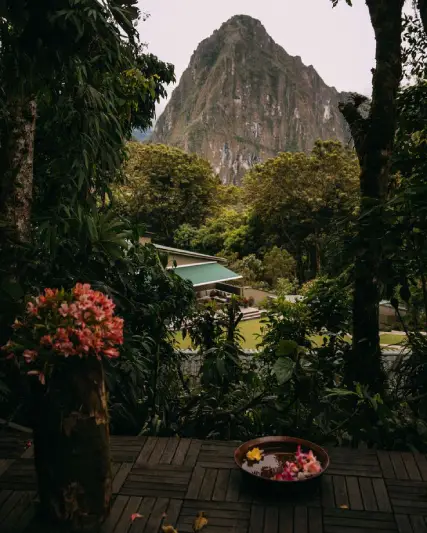
Why Huayna Picchu Is Peru’s Most Famous Mountain
Ask most travelers to picture “a famous mountain in Peru,” and — even without knowing its name — they are usually picturing Huayna Picchu rising behind the citadel. It owes that fame entirely to its position: no other viewpoint in the Machu Picchu complex produces the wide, symmetrical postcard shot that made the site instantly recognizable worldwide. Reaching that viewpoint, however, means an actual hike, not just a short walk to a lookout.
How Difficult Is the Huayna Picchu Hike?
The Huayna Picchu hike is short in distance — about 2.5 km (1.5 miles) round trip — but demanding because of steep, uneven Inca-built stone steps, narrow ledges, and sections with fixed cables for support. Most visitors complete it in 1.5 to 2.5 hours round trip. It is not technical climbing and does not require ropes or equipment, but it does require reasonably good balance, a comfortable relationship with heights, and lungs already adjusted to the altitude.
Because both Machu Picchu and Huayna Picchu sit well above sea level, arriving properly acclimatized makes a real difference in how the hike feels. Our Altitude Sickness Cusco guide covers exactly how to acclimatize in Cusco and the Sacred Valley before attempting any high-altitude hike in the region.
Tickets and Permits for Huayna Picchu
Huayna Picchu tickets are sold separately from the standard Machu Picchu entrance and are strictly limited — typically around two entry time slots per day (commonly 7:00 a.m. and 10:00 a.m.), with roughly 200 hikers admitted per slot. Because demand far outstrips that daily capacity, especially from June to August, booking 6 to 8 months ahead is a realistic minimum for the exact date you want, and last-minute availability is rare in high season.
Tickets can be purchased directly through the Peruvian government’s official channel at machupicchu.gob.pe or via the official tourism board’s peru.travel booking guide, or bundled into a package by a licensed tour operator. For full pricing, circuit combinations, and a step-by-step booking walkthrough, see our Essential Guide to Machu Picchu Tickets.
Best Time to Hike Machu Picchu and Huayna Picchu
The dry season, roughly May to September, offers the clearest skies and the most reliable trail conditions for both the citadel and the Huayna Picchu climb — which also makes it the busiest and most expensive time to book. For a full month-by-month breakdown of weather, crowds, and pricing trends, see our Best Time to Visit Peru guide.
Sample Itinerary: Combining Machu Picchu and Huayna Picchu
A comfortable way to fit both the citadel and the Huayna Picchu hike into a Peru trip looks like this:
- Days 1–2: Arrive in Cusco and acclimatize, with an easy day in the Sacred Valley.
- Day 3: Travel to Aguas Calientes (by train, or as part of a trekking itinerary).
- Day 4: Enter Machu Picchu early with your Huayna Picchu time slot, hike the mountain, then explore the citadel at a relaxed pace.
- Day 5: Return to Cusco or continue your Peru itinerary.
Travelers who prefer to walk in on the historic Inca Trail rather than arrive by train can combine this with our 2-Day/1-Night Inca Trail to Machu Picchu, which finishes at Intipunku (the Sun Gate) before descending into the citadel. For a slightly longer, more complete itinerary with a Cusco city tour included, see the Machu Picchu Tour 3D/2N package.
How Do You Spell It? Common Machu Picchu Misspellings
“Machu Picchu” is genuinely easy to misspell, and search engines see all of these variations constantly: Machu Pichu, Macchu Picchu, Macchu Piccho, Manchu Picchu, Matchu Picchu, Michu Picchu, Machi Picchu, Mchu Picchu, Machuu Picchu, Machu Piccchu, Machu Picachu, Macgu Picchu, Macchi Picchu, and stylistic variants like Machu-Picchu or Machu_Picchu. However it’s typed, they all point to the same place: the Inca citadel above the Urubamba River in Cusco, Peru.
- Machu Pichu
- Macchu Picchu
- Macchu Piccho
- Manchu Picchu
- Matchu Picchu
- Michu Picchu
- Machi Picchu
- Mchu Picchu
- Machuu Picchu
- Machu Piccchu
- Machu Picachu
- Macgu Picchu
Frequently Asked Questions
Is it Machu Picchu or Huayna Picchu?
They are two different things in the same place: Machu Picchu is the Inca citadel, and Huayna Picchu is the mountain behind it. You need a ticket to Machu Picchu to visit at all, and a separate add-on ticket if you also want to climb Huayna Picchu.
What is Huayna Picchu also called?
It is also spelled Wayna Picchu, and is sometimes informally called “Cerro Picchu” by Spanish-speaking visitors. Its official name on tickets and maps is Huayna Picchu.
Is Machu Picchu Mountain the same as Huayna Picchu?
No. They are two separate peaks with two separate tickets. Huayna Picchu is the shorter, steeper, more famous mountain behind the citadel. Machu Picchu Mountain (Montaña Machupicchu) is a taller, longer hike on the opposite side of the site, generally with fewer crowds.
How high is Huayna Picchu compared to Machu Picchu?
Machu Picchu sits at approximately 2,430 m (7,972 ft), while the summit of Huayna Picchu reaches approximately 2,693–2,720 m (8,835–8,923 ft) — about 260–290 meters higher than the citadel.
Do I need a separate ticket to hike Huayna Picchu?
Yes. Huayna Picchu is not included in a standard Machu Picchu entrance ticket. It is sold as a limited add-on with its own entry time slot, and it should be booked months in advance for peak season.
How long does it take to hike Huayna Picchu?
Most visitors complete the round trip in 1.5 to 2.5 hours, covering roughly 2.5 km (1.5 miles) of steep stone steps.
Can beginners hike Huayna Picchu?
Reasonably fit beginners can complete it, but it involves steep, uneven steps, narrow ledges, and sections with cables, so a comfortable tolerance for heights matters more than athletic ability. Arriving acclimatized to the altitude makes it noticeably easier.
What is the famous mountain in the Machu Picchu photos?
The peak in almost every classic Machu Picchu photograph is Huayna Picchu, rising directly behind the citadel.
Plan Your Machu Picchu and Huayna Picchu Trip
Sisa Peru Tours can build your Machu Picchu and Huayna Picchu visit into a complete Cusco itinerary, from acclimatization days in the Sacred Valley to your entry time slot at the citadel. Explore the 2-Day Inca Trail to Machu Picchu, the Machu Picchu Tour 3D/2N with Cusco City Tour, or check ticket availability first in our Essential Guide to Machu Picchu Tickets.
Sources and References
- UNESCO World Heritage Centre — Historic Sanctuary of Machu Picchu
- Ministerio de Cultura del Perú / Machupicchu.gob.pe — Official ticket purchase information
- PROMPERÚ — How to buy tickets to visit the Historic Sanctuary of Machupicchu