


Before you even see the ruins of Pisac, you hear them the wind whistling through ancient stone doorways perched thousands of feet above the Vilcanota River. This dramatic sensory experience greets visitors at the gateway to the Sacred Valley, offering an immediate contrast to the modern world below.
While Pisac, Peru is famous for its vibrant Sunday market in the village square, looking up reveals the area’s true marvel: a mountainside scarred with giant green steps that tell the story of a civilization that literally reshaped the earth.
This distinction creates a tale of two cities: the bustling colonial village on the riverbank and the silent, imposing Sacred Valley archaeological park ruins towering above. Many travelers visit only the market, assuming the town is merely a shopping destination. However, the mountain complex was historically a vital fortress defending the southern entrance to the Sacred Valley, protecting the capital of Cusco less than an hour away.
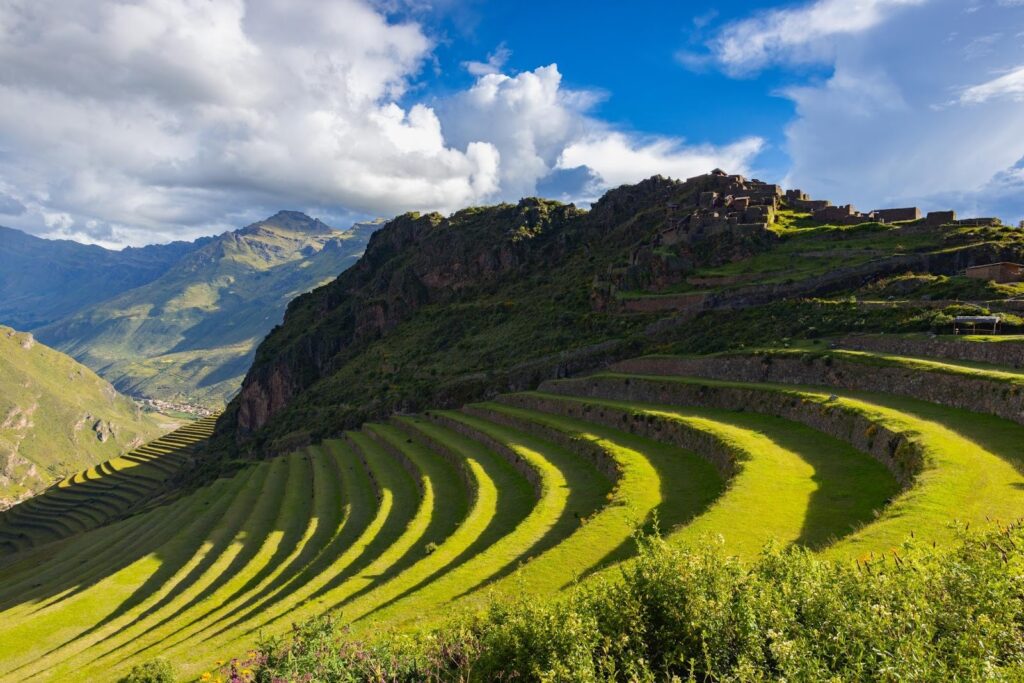
Dominated by sweeping curves carved into the cliffs, the site introduces visitors to a masterpiece of Incan engineering known as Andenes. These are sophisticated agricultural terraces designed to create farmable land where none existed. Feeding a growing population on the side of a vertical cliff was a logistical nightmare, yet the Incas solved it by turning the mountain into a massive, stone-walled laboratory.
These structures were far more than simple gardens. Pisac history reveals that the Andenes created distinct microclimates at each level, functioning like natural greenhouses. This allowed the Incas to cultivate a diverse range of crops from hardy potatoes at the cooler, higher elevations to maize in the warmer lower tiers ensuring food security for the empire.
Standing on these terraces offers a perspective on scale that rivals even Machu Picchu, often with a fraction of the crowds. Seeing the purpose behind these massive earthworks clarifies why Pisac was not just a scenic outpost, but a crowning jewel of agricultural and military precision.
Surviving the 3,300-Meter Ascent: Essential Logistics for Your Pisac Journey
While Cusco sits breathless at 3,400 meters, the lower elevation of Pisac Peru (2,972 meters) offers a slight reprieve in the town square, though the ruins themselves demand a steep hike back up into thin air.
Treat the altitude like a battery drain on your phone; even if you feel fine, your energy reserves deplete faster here than at sea level. To avoid «soroche» (altitude sickness), pace your exploration slowly and drink plenty of water to combat the dry Andean wind.
Accessing the archaeological park requires the Boleto Turistico (Tourist Ticket), a bundled pass required for key sites in the Sacred Valley. Most travelers opt for the Partial Ticket (Circuit III), valid for two days, which covers Pisac, Ollantaytambo, and Chinchero. The Boleto Turistico price and info is vital planning data: expect to pay roughly 70 Soles ($19 USD) for this partial pass, available in Cusco or at the checkpoint.
How to get from Cusco involves choosing between economy and comfort for the 30-kilometer journey:
- Colectivo (Shared Van): The authentic choice. These vans leave from Calle Puputi when full, costing just 4–6 Soles ($1.50 USD).
- Private Taxi: Offers flexibility to stop for photos along the winding roads, typically running 60–80 Soles ($15–20 USD).
- Guided Tour: Provides zero-stress logistics but limits your exploration time to a rigid schedule.
With your lungs adjusted and your ride secured, you are ready to descend into the village itself.
Beyond the Trinkets: Navigating the Sunday Market and Colonial Village Streets
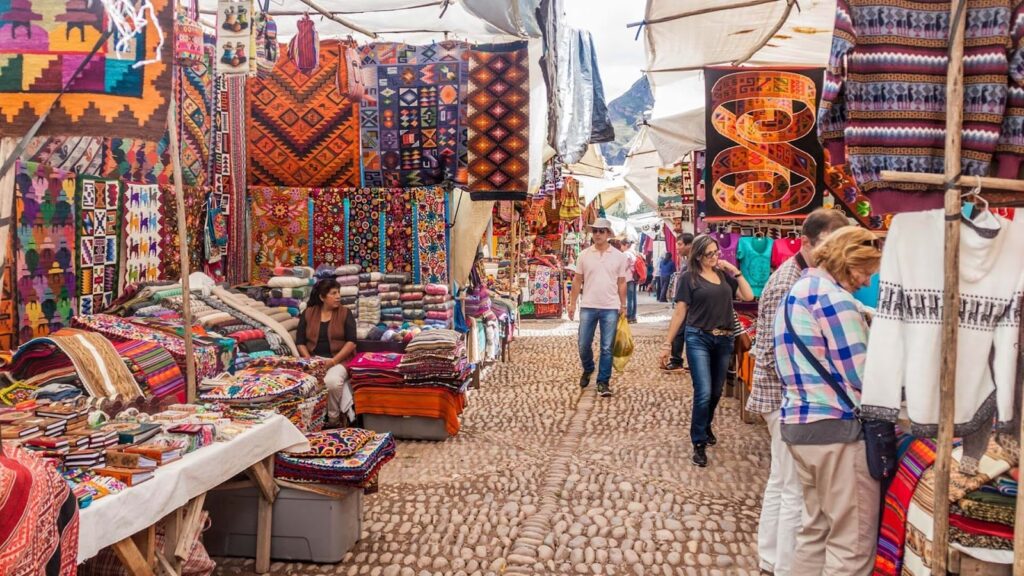
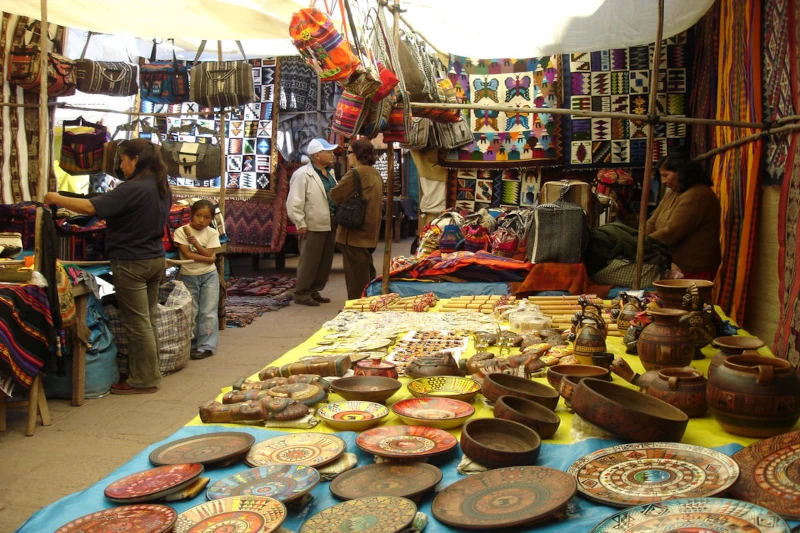
As you step out of your transport, the aroma of roasting corn and a vibrant kaleidoscope of wool greet you instantly. The Pisac market Peru is famous not just for its size, but for serving as the commercial heartbeat where the Sacred Valley meets the modern traveler. While souvenir stalls flood the colonial plaza every day, the atmosphere shifts palpably on Sundays when indigenous communities descend from the highlands, transforming a standard shopping stop into a living cultural exchange.
How to Identify Authentic Peruvian Textiles and Avoid Synthetic Souvenirs
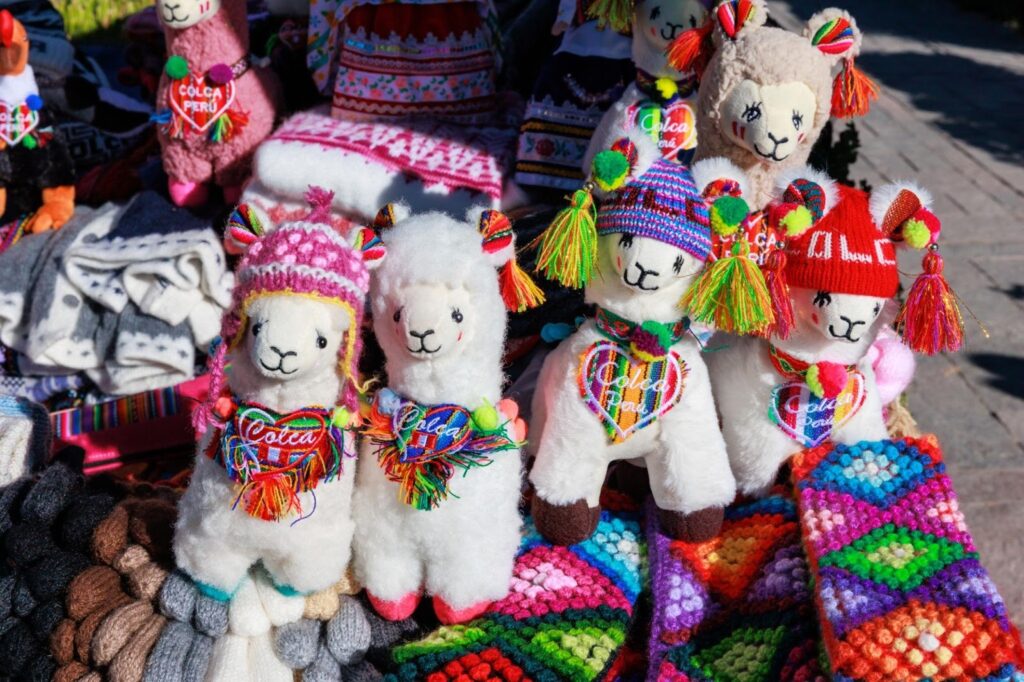
Finding authentic Peruvian textile shopping opportunities amidst mountains of synthetic souvenirs requires a keen eye. Mass-produced items often feel stiff and display neon-bright chemical dyes, whereas genuine alpaca or sheep wool feels cool to the touch and features softer, natural earth tones. Look for the «backstrap loom» weavers—artisans physically tethered to their work—whose Sunday market artisanal crafts carry tiny irregularities that prove human hands, not machines, threaded every geometric design.
Beyond the textiles, the village streets are lined with handcrafted silver jewelry stores showcasing a purity standard distinct to the Andes. While the rest of the world typically trades in «Sterling» or 925 silver (92.5% purity), Peruvian artisans often work with 950 silver. This higher silver content makes the metal slightly softer and brighter, allowing for the intricate filigree work and semi-precious stone inlays that define the local style.
The most profound transaction here involves no money at all, preserved in the tradition of trueque, or ceremonial barter. On Sundays, local farmers exchange highland potatoes for lowland coca leaves or corn, bypassing currency entirely to maintain an economic balance that pre-dates the Spanish conquest. This reliance on agricultural diversity in the plaza offers a perfect introduction to the massive structures towering above you, where the Incas engineered the land itself to feed an empire.
The Vertical Laboratory: How Incan Engineering Transformed Mountain Slopes into Fertile Gardens
The market below thrives on produce, but the source of that abundance hangs precariously above the village. From the riverbank, the sweeping green curves carved into the mountainside look like decorative stairs for giants, but these are Andenes, the technological backbone of the empire. Pisac Peru elevation changes dramatically from the valley floor to the peaks, and the Incas exploited this verticality to solve a desperate problem: how to feed a growing population with almost no flat land.
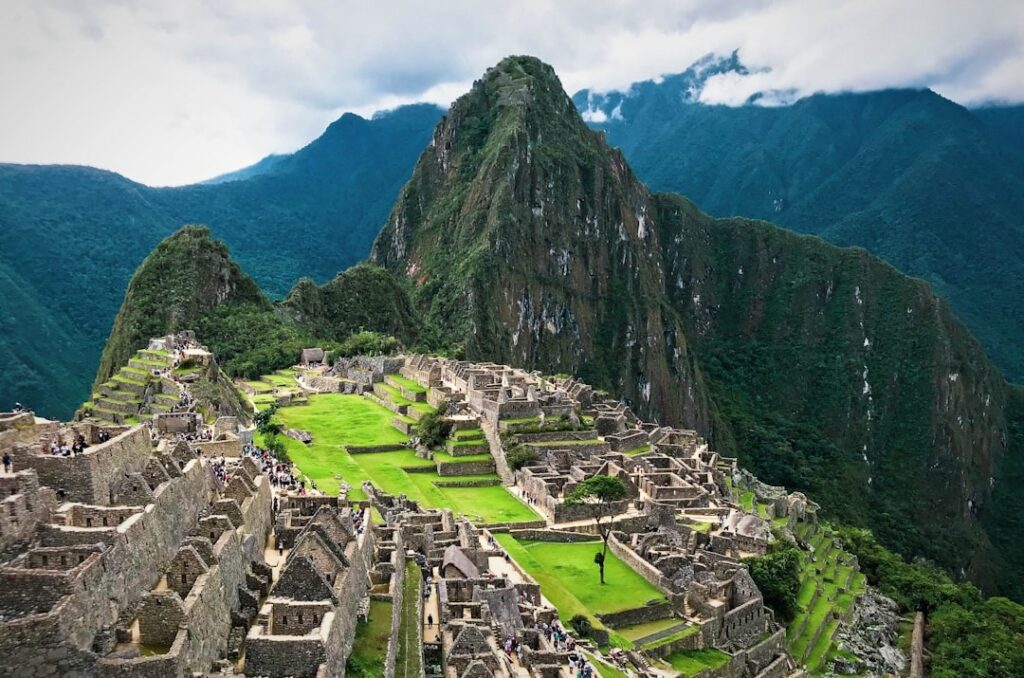
While the visible stone walls are impressive, the true genius of Inca agricultural terrace engineering lies buried underground. If these were simple piles of dirt, the first heavy Andean rain would wash the mountainside into the valley.
Instead, engineers filled the bottom of each terrace with large rocks, followed by gravel, sand, and finally topsoil brought from lower elevations. This invisible layering system acts like a modern French drain, filtering water safely away to prevent erosion while keeping the roots moist but not waterlogged.
Ingenious Inca Agricultural Terraces: A Natural Climate Control System
This structure turns the entire mountain into a functional climate control system. The stone retaining walls absorb solar heat during the day and release it slowly at night, preventing frost from killing delicate crops. Because the temperature shifts significantly with altitude, a difference of just a few hundred feet creates distinct ecological zones. This allowed farmers to simulate different environments, growing tropical coca leaves on lower tiers and hardy potatoes near the top, effectively creating a vertical supermarket on a single slope.
Historians believe Pisac served as an agricultural research station where crop varieties were adapted to high altitudes before being distributed across the Andes. Yet, simple survival wasn’t the only motivation for such labor-intensive construction; the orientation of these gardens suggests a deep cosmological connection. Just as they mastered the earth to control the harvest, the priests at the summit sought to tether the celestial cycles to ensure the sun’s return.
Tethering the Sun: Unlocking the Mystery of the Intihuatana Solar Clock
Ascending from the agricultural zones to the temple sector reveals a startling shift in craftsmanship, marking the transition from the practical to the divine. Here, the rough fieldstones used for terrace walls are replaced by pink granite blocks cut with laser-like precision, a style known to archaeologists as Imperial Masonry. These stones are not merely stacked; they are sanded and fitted together so tightly that not even a blade of grass can pass between them, utilizing a mortarless construction method designed to dance with earthquakes rather than break against them.
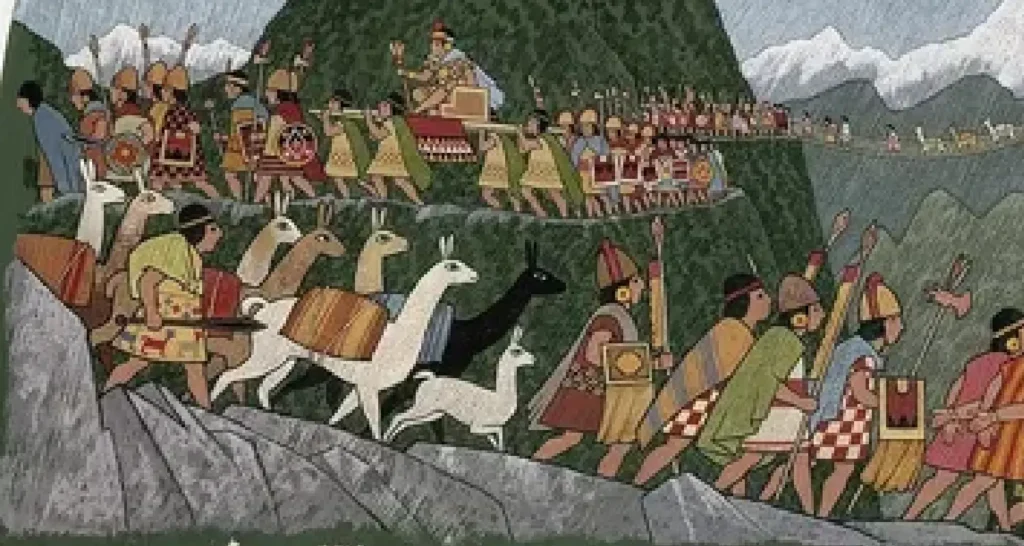
At the heart of this sacred district sits the Intihuatana, a Quechua term often translated as the «Hitching Post of the Sun.» Unlike the surrounding walls built from quarried blocks, this ritual stone is carved directly from the mountain’s bedrock, serving as a physical anchor between the earth and the sky. The Intihuatana solar clock significance lies in its ability to track the movement of the sun, with specific angles casting shadows that indicated the solstices and equinoxes with remarkable accuracy.
Inca Astronomy and the Ritual of “Tying the Sun” in Pisac
To the Incas, astronomy was not an abstract science but a survival necessity ingrained in Pisac history. The high priest would ritually «tie» the sun to this stone during the winter solstice, symbolically preventing the light from drifting too far away and ensuring the return of warm weather. This ceremony acted as a critical calendar, telling the empire exactly when to plant the crops in the terraces below to avoid devastating frosts.
While Spanish conquistadors destroyed many similar altars to erase indigenous beliefs, the Pisac ruins retain a rare, relatively intact example of this sacred engineering. Seeing this intimate religious site offers a glimpse into the spiritual mind of the Inca, yet it represents only a fraction of the city’s footprint. Beyond the temple, the site expands outward, challenging the notion that Machu Picchu is the only massive citadel hiding in the clouds.
Scale and Grandeur: Why Pisac’s Archaeological Park Rivals Machu Picchu
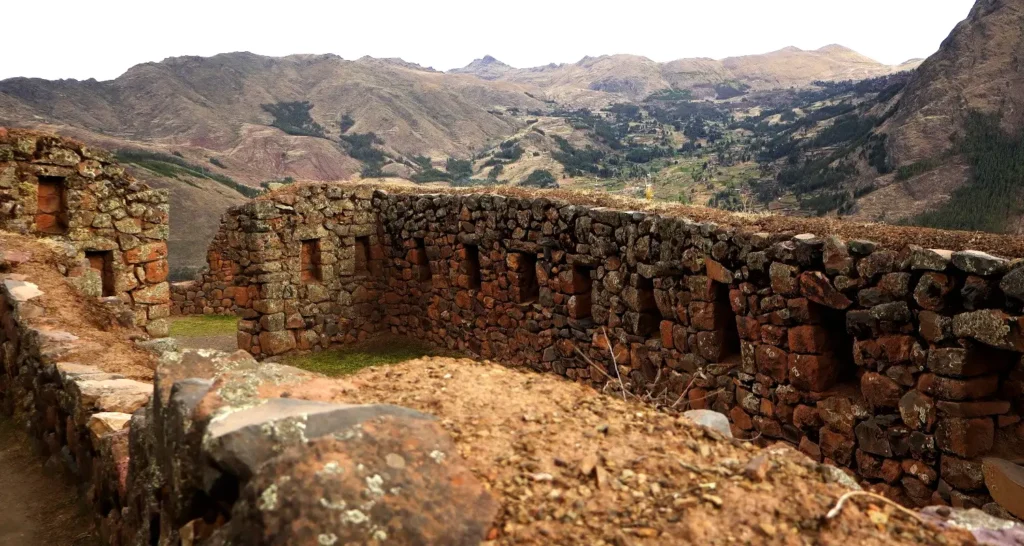
Scanning the sheer cliffs away from the temple sector, you might notice rows of small, circular structures clinging to the mountainside like bird nests. These are Qollcas, the granaries of the empire. Unlike the residential zones near the modern pisac village below, these storehouses were intentionally built at high altitudes to utilize the cool mountain breeze as a natural refrigerator. By positioning them on windy ridges, the Incas could preserve corn, quinoa, and potatoes for years, ensuring the city could survive long sieges or droughts without succumbing to starvation.
Walking the trails connecting these sectors reveals that the site was designed as much for war as for worship. The layout funnels visitors through narrow tunnels and steep staircases engineered «choke points» where a small group of defenders could hold off a massive invading force. At the highest peaks sits the Pukara, a fortified residential sector that offered commanding views of anyone approaching through the valley, proving that the Incas were master strategists who used the landscape itself as a weapon.
Travelers often debate the merits of this Archaeological site vs Ollantaytambo, another heavy-hitter in the region. While both served as fortresses, Pisac stands out for its sheer magnitude and completeness. Key differences define the experience:
- Primary Function: Pisac focuses on agricultural abundance and religious integration; Ollantaytambo is built primarily for military defense and administration.
- Layout Style: Pisac is a sprawling city-state spread across four mountain peaks; Ollantaytambo is a compact fortress guarding a valley floor entrance.
- Accessibility: Pisac requires navigating extensive ridge trails; Ollantaytambo rises steeply and directly from the town center.
The Ultimate Day Trip Itinerary: How to Hike Pisac Without Losing Your Breath
Most pisac tours drop visitors at the market, leaving them to stare up at the intimidating climb to the ruins, but the secret to conquering this site lies in reversing the route. By starting at the very top, you transform a grueling uphill battle into a scenic, gravity-assisted stroll through history. This strategy allows you to save your energy for exploring the intricate stonework rather than burning it all on the ascent.
A strategic route maximizes the experience:
- Taxi to the Summit: Pay a local driver to take you past the checkpoints to the upper parking lot near the Qantus Raccay sector.
- The Ridge Walk: Traverse the relatively flat path to the Temple of the Sun (Intihuatana) for the most iconic views of the valley.
- The Tunnel Descent: Follow signs for the «tunnel» to pass through a narrow rock fissure engineered by the Incas to connect the upper and lower cities.
- Village Landing: Continue the winding path past the agricultural terraces until you emerge directly into the town square.
Timing your descent is just as critical as choosing your route. The best time for Andean trekking in this specific microclimate is early morning, ideally arriving at the top by 8:30 AM. Not only does this beat the tour bus crowds arriving from Cusco, but the morning light also hits the eastern terraces at a sharp angle, creating high-contrast shadows that make the «green stairs» pop in photographs.
Even with gravity on your side, remember that descending thousands of steps requires caution. Basic high altitude hiking tips apply here: pause often to protect your knees and drink water before you feel thirsty to combat the thin, dry air. After a three-hour descent, your legs will likely feel heavy, signaling it is time to trade ancient history for modern comfort in the village below.
Rest and Recovery: Finding the Best Hotels and Local Flavors in Pisac Village
After the long descent, the colonial grid of Pisac village offers a quiet sanctuary that day-trippers rarely see. Most tour buses retreat to Cusco by late afternoon, leaving the cobblestone streets to locals and savvy travelers who know that the Sacred Valley awakens when the sun goes down. Choosing among the hotels in Pisac Peru often comes down to one critical amenity: heating. The high altitude means nights are crisp, and the best accommodations blend rustic adobe aesthetics with the modern warmth necessary to ensure you are well-rested.
Hunger hits hard in the fresh mountain air, and the local cure is the empanada. You will frequently spot signs for the Horno Colonial—a traditional, dome-shaped clay oven fired by wood—scattered throughout the town’s courtyards. These ovens are the heart of Pisac’s culinary identity, baking savory pastries filled with cheese, onions, and local herbs to a perfect golden crisp. It is the ideal comfort food to combat the chill of the Urubamba River valley weather, offering a taste of history that is far more authentic than the generic pizzas found on the main square.
To fully recharge before diving deeper into the valley’s traditions, consider these local favorites:
- Boutique Comfort: Pisac Inn – Located directly on the plaza, offering colonial charm and a celebrated restaurant.
- Budget Base: Wolf Totem Guesthouse – A backpacker favorite with stunning views and a communal vibe.
- Authentic Bite: Horno Colonial San Francisco – Famous for serving empanadas straight from the fire.
Quechua Roots and Silver Souls: Understanding the Cultural Legacy of the Urubamba Valley
While the ruins often steal the spotlight, the true heartbeat of the Urubamba River valley is its people. The descendants of the Incas did not vanish; they are the shopkeepers, farmers, and weavers you meet in Pisac Peru today. They speak Quechua, the ancient language of the empire, which you might hear as a soft, rhythmic murmur in the market stalls. This is not a historical reenactment performed for tourists, but a resilient living culture that has adapted to the modern world while keeping its roots firmly planted in the past.
Ayni: The Andean Philosophy of Sacred Reciprocity and Community Life
At the center of these Quechua community cultural traditions lies a guiding philosophy called Ayni. This concept represents «sacred reciprocity» or «today for you, tomorrow for me,» but applied to an entire society rather than just two friends. It is the reason neighbors come together to build a house or harvest a field without exchanging a single coin. This system of mutual aid was essential for survival in the harsh Andean environment for centuries, and it remains the social glue that holds the high-altitude villages together.
You can witness this blend of history and utility if you look closely at the fields clinging to the steep slopes. Farmers often bypass modern tractors in favor of the chaquitaclla, a traditional foot-plow designed by the Incas. It looks deceptively simple, a long pole with a footrest and a curved metal tip but it is an engineering marvel perfectly suited for churning rocky soil on vertical terraces where heavy machinery would fail.
To the locals, the landscape itself is alive. The towering peaks looming over the valley are known as Apus, or mountain spirits, viewed as protectors that control the water and fertility of the land. Respecting these giants is essential, not just for spiritual harmony but for practical travel, as the Apus dictate the shifting skies that determine exactly when you should plan your journey.
Timing Your Trek: Navigating the Urubamba River Valley Weather for a Perfect Trip
The Apus dictate a climate that shifts from summer to winter in a single day. At nearly 10,000 feet, the thin air creates intense solar heat that vanishes the moment clouds roll in. Packing requires a strategy for 20-degree Celsius (35-degree Fahrenheit) swings, shedding layers as you climb the sun-drenched ruins and bundling up when afternoon shadows lengthen.
Choosing your dates involves balancing clear skies against heavy foot traffic. The Urubamba River valley weather splits into two distinct personalities, helping you decide the best time for Andean trekking:
- May to September (Dry Season): Crisp blue skies and freezing nights. This is the optimal window for photography, but expect peak tourist numbers.
- October to December (Shoulder Season): The landscape turns lush green and crowds thin out, though afternoon showers become frequent.
- January to April (Wet Season): Heavy rains often disrupt travel, but the valley is at its most vibrant and verdant.
Regardless of the month, the steep canyon walls cut your daylight shorter than you might expect. Photographers chasing the «Golden Hour» must act early, as the sun drops behind the mountains well before actual sunset, plunging the valley into twilight while the peaks above remain lit.
Walking the Path of the Incas: Strategic Exploration of Pisac
Pisac is more than a scenic stopover on the way to Machu Picchu; it is a masterclass in Incan ingenuity a place where military fortress, agricultural laboratory, and spiritual sanctuary coexist. Whether you are admiring the polygonal masonry that has withstood centuries of earthquakes or visualizing the harvest on the sweeping andenes, you possess the context to appreciate not just the beauty of the Sacred Valley, but the brilliance of the civilization that shaped it.
To turn this understanding into a successful Sacred Valley day trip itinerary, prepare for the physical reality of the site. The climb to the pisac ruins is demanding, but the following steps will ensure you are ready to explore with confidence:
- Secure the Right Access: Purchase the Boleto Turístico (Tourist Ticket) in Cusco or at the site entrance to gain entry.
- Time Your Visit: Aim for Sunday to experience the market at its peak volume, or choose a Tuesday or Thursday for a balance of commerce and calm.
- Respect the Altitude: Spend at least 24 hours acclimatizing in the valley before attempting the full hike up the mountain.
- Pack Essentials: Bring more water than you think you need and sun protection, as the high-altitude sun is intense on the exposed trails.
Finally, challenge yourself to move beyond the typical tourist loop. Consider one authentic interaction in the village below, perhaps trying a fresh empanada from a traditional clay oven or asking a weaver about the natural dyes they use. Then, when you finally reach the Intihuatana at the summit, pause for a moment. You aren’t just standing on a mountain in pisac Peru; you are standing at the exact point where the Incas believed they tethered the sun to the earth, ensuring the cycle of life continues for another season.